One system carries the fight from the first sensor return to the assessed effect — and keeps running when the network doesn't.
Most shops sell you intelligence, then a planning tool, then a tasking system — and leave you to wire them together. You become the integration layer.
INSTOPCO fuses the three into one substrate: the awareness that builds the picture is the awareness the decision reasons over, is the awareness the response acts on. Intelligence sees it. Strategy weighs it. Operations does it — in one motion the operator never leaves.
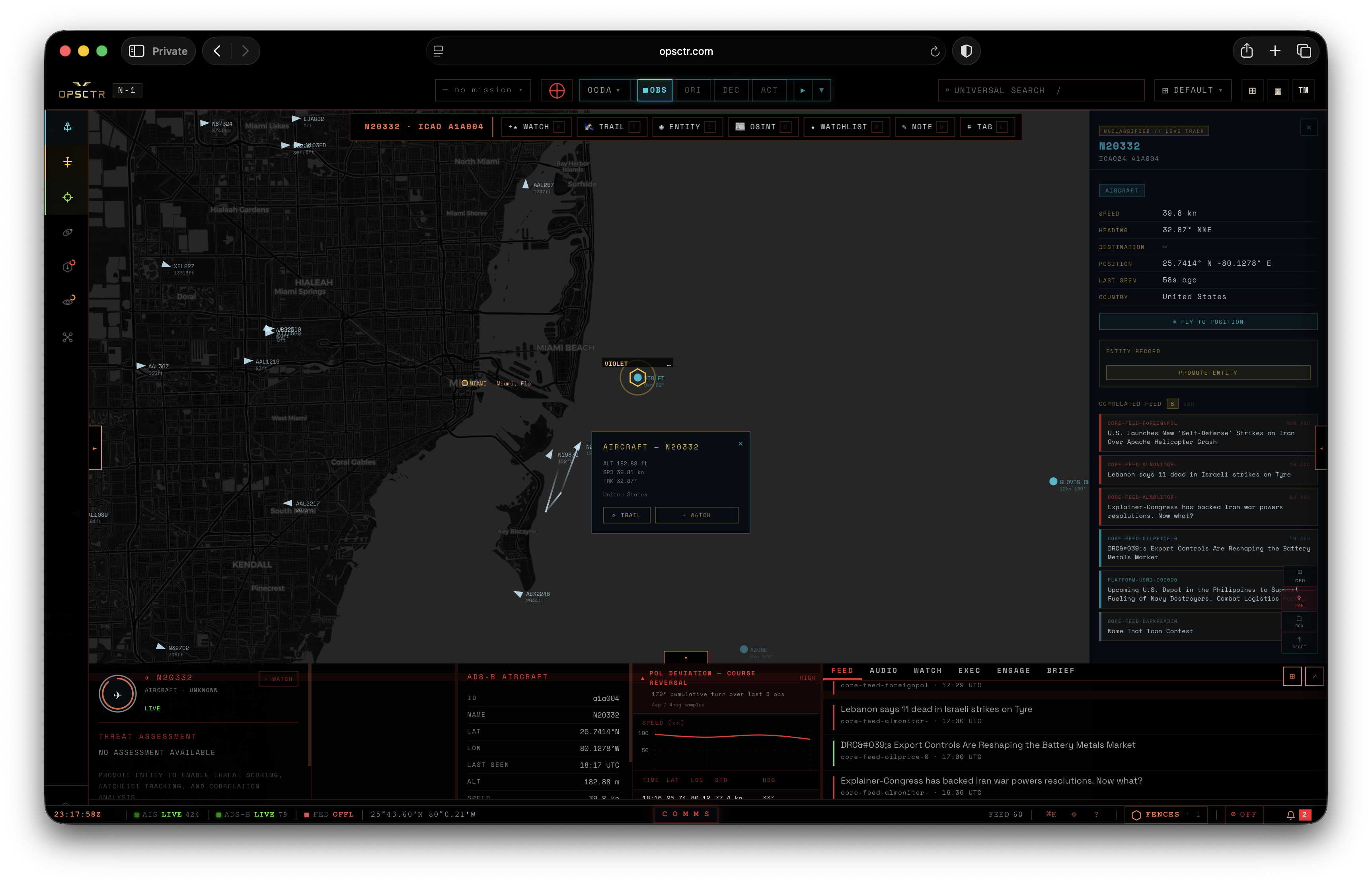
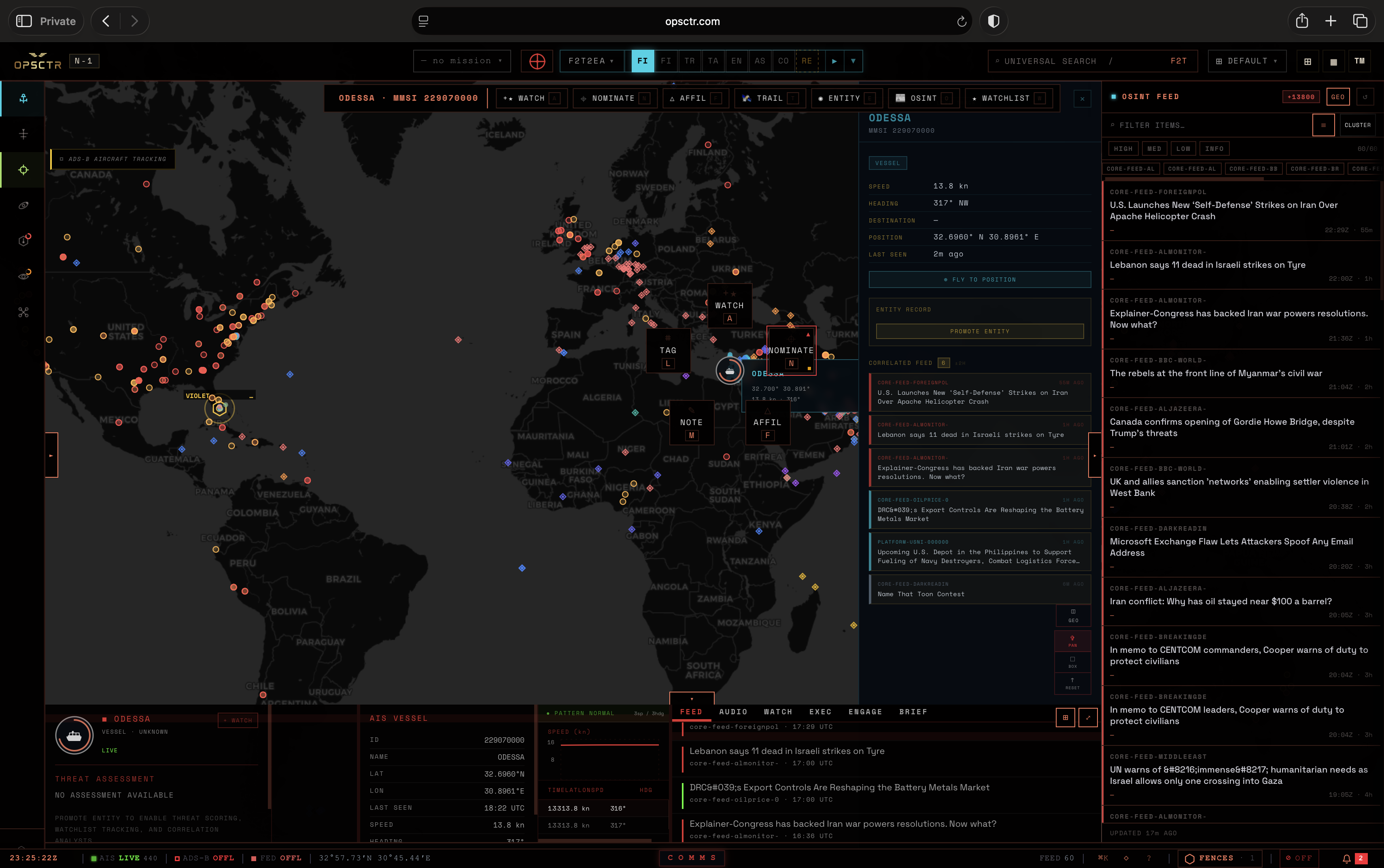
Air, sea, space, and open source converge on a single map — every domain on the same clock, the same geography, the same picture. No console-switching, no stitching feeds together in your head. This is the raw material of every decision that follows, and it arrives already correlated, not as a pile of tabs to reconcile.
One ingestion substrate — AIS · ADS-B · TAK/CoT · OSINT — normalized through a single handler model.
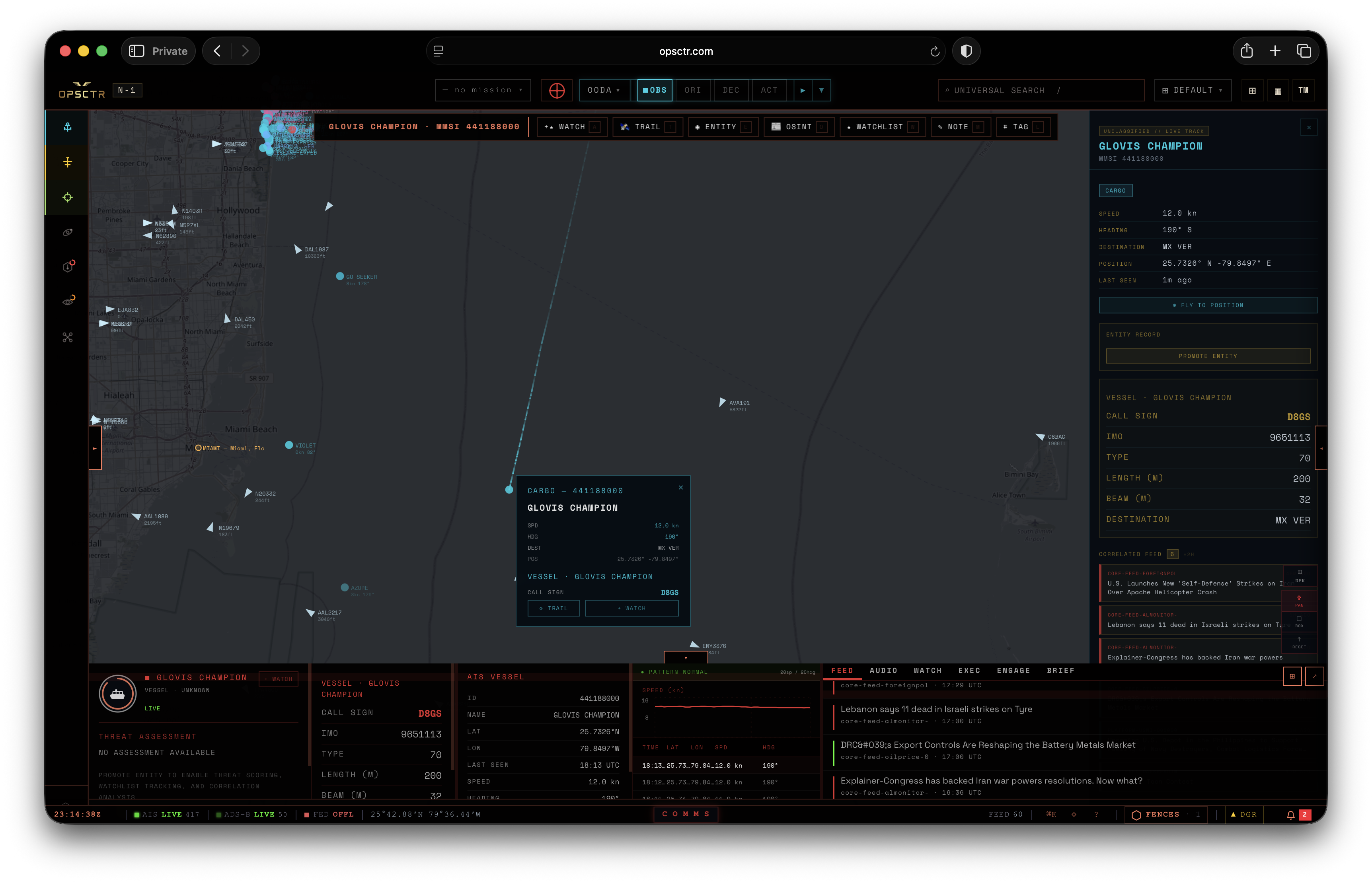
A vessel breaks its own pattern. The substrate doesn't just draw a red ring — that's the easy part — it scores the deviation against doctrine and your rules and hands up the decision already framed. The operator isn't told "something's off"; they're handed the anomaly, what it likely means, and the gate to act on it. That hand-off from seeing to deciding happens inside one system, not across two.
Pattern-of-life baselining → computed confidence → doctrine-aware alerting, on one path.
Open-source reporting doesn't sit in a separate tab waiting to be searched. It's geo-tagged, severity-ranked, and bound to the contact in front of you — the narrative and the track are one object. Context arrives with the contact instead of being hunted down after the fact, so the picture gets richer the longer you watch it.
Multi-source open source, fused to entities and time-correlated.
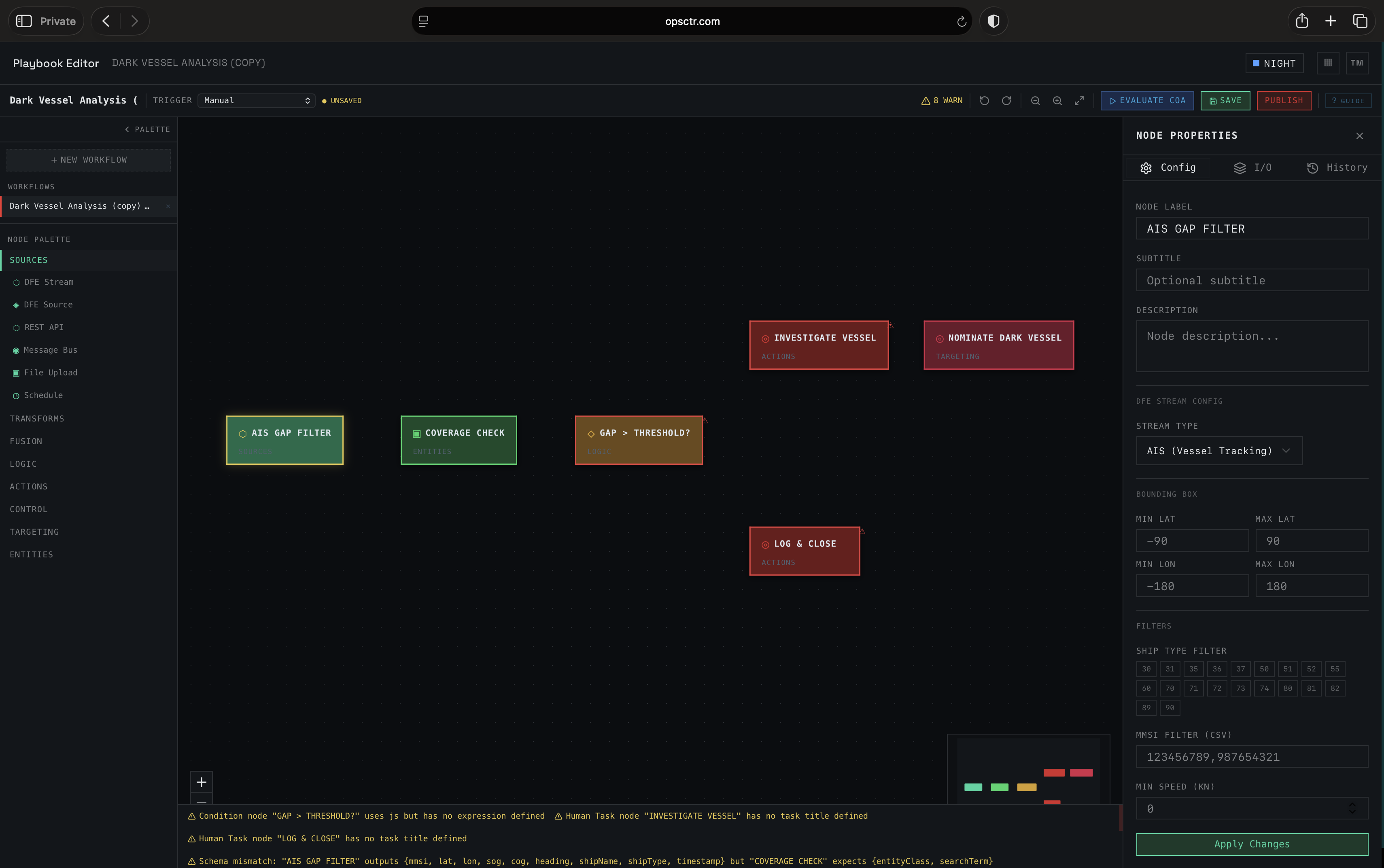
The dark-vessel playbook isn't a feature — it's the fusion running end to end. One picture, one decision, one response, with no seam for the operator to bridge. Built once, validated before it can ship, and run on the same substrate that drew the first track.
An AIS gap and a coverage check surface a vessel that's gone dark — the awareness layer flags it on its own.
A threshold and an ROE gate decide whether it crosses from noticed to actionable — the human stays on the trigger.
Nominate, investigate, or log — the response executes and writes itself back into the record.
A platform you can trust with a decision is one where every layer obeys the same rules. These are ours — each one a property of the substrate, not a promise about it.
Not point tools. The operator never leaves the system to cross a phase.
F2T2EA, ROE, and classification are enforced — not painted on.
An immutable record of what was decided, and why it was permitted.
You author exactly what each partner sees — and nothing more.
The hardness is a posture you set, not a lock you're stuck with.
Rehearse, compare, improve — the loop closes on itself.
When the link degrades, the picture doesn't go dark and the decision doesn't wait. Run the full operating picture forward with the federation link down — sovereign, nothing on the critical path to phone home to.
A core light enough to run where the mission is, not where the data center is — and re-sync when the link returns. Sovereign edge: foundation fielded, full mesh in active build.
Traverse the platform yourself, or bring us the mission the seams keep breaking.